

An emerging urban challenge fuelled by Spain’s growing pet population
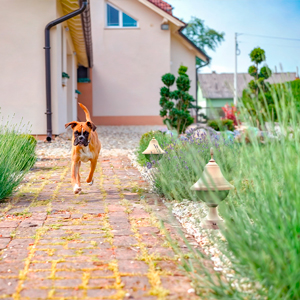
PAMPLONA—02/12/2025— Spain currently has one of the largest companion-animal populations in Europe. In dogs alone, the number exceeds 9.2 million¹, and the total number of pets in the country rises to more than 30 million². This sustained increase confirms a profound shift in the relationship between people and their animals, and it is also transforming how public spaces are used.
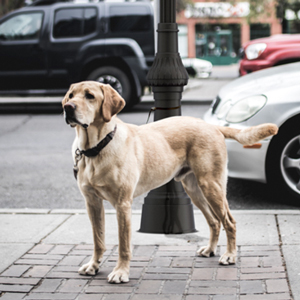
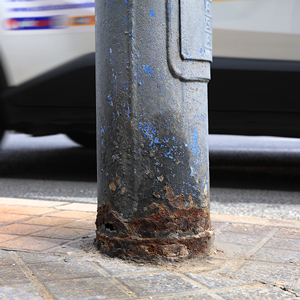
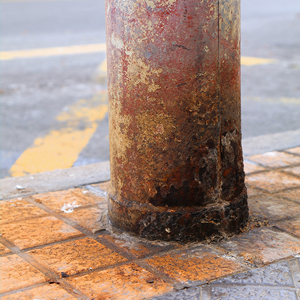
During daily walks, dogs interact with multiple urban elements, and lighting columns are among the most frequent. Their use as a reference point is a natural behavior, but it exposes these elements—especially the bases—to repeated contact with urine. Over time, this interaction produces visible deterioration: staining, loss of coating, discoloration, and, in later stages, clear signs of corrosion.
A chemical agent that accelerates metal degradation
Dog urine contains ammonia, salts, and acidic compounds capable of reacting with metals and accelerating their deterioration. Technical studies³ have shown how these compounds attack the surface protection of metal columns, causing pitting, oxidation, and structural weakening. When exposure is daily and continuous—such as in parks, pedestrian areas, or residential zones with a high presence of dogs—this deterioration intensifies rapidly.
In some internationally documented cases, the accumulated effect of urine has even contributed to structural failures that have compromised the stability of the columns⁴. Although these episodes are extreme, they illustrate the impact that accelerated corrosion can have on installations that are in constant use and located in direct contact with the public.
A visible issue affecting urban aesthetics and management
The deterioration of columns is not purely a technical matter. It also affects the perception of the urban environment. Persistent staining, degraded paint, or corroded bases present a worn image that can affect the visual quality of streets, squares, and green areas. In historic districts or high-tourism zones, this aesthetic impact is especially sensitive.
To this is added the increased maintenance workload. Affected columns require more frequent repainting, more exhaustive structural inspections, and earlier replacements. This cycle of interventions represents a significant cost for municipalities and reduces the efficiency of public-lighting investments.
The technical alternative: materials that do not react to urine
Preventing this deterioration does not depend on more frequent repainting or reinforcing surface treatments. These solutions are temporary and do not stop chemical compounds from continuing to act on the metal. The most effective approach is to use materials that, by their very nature, are not vulnerable to corrosion.
The engineered technical polymers used by ATP Iluminación offer a structural and long-lasting solution to this problem. The S7 material—used in columns, brackets, and chassis—is completely immune to the action of urine, as well as to humidity, salt air, and other degrading agents present in the urban environment. In addition, as a non-conductive material, it eliminates electrical risks in areas where people and animals often come into direct contact with the column.
The T5 material—used in diffusers—provides high light transmission, impact resistance, and stability against solar radiation. Both materials undergo rigorous testing in salt-spray, UV, and climatic chambers that reproduce the most demanding conditions, ensuring optimal performance over the years. The IP66+ full sealing, IK10+ anti-vandal resistance, and a 10-year warranty complete a solution designed to operate without corrective maintenance.
Lighting adapted to the reality of today’s cities
With millions of dogs interacting daily with urban furnishings, having infrastructures capable of withstanding this continuous exposure is essential for maintaining the quality and safety of public lighting. Adopting materials immune to corrosion not only avoids visual and structural deterioration but also significantly reduces maintenance costs and improves the overall efficiency of the installation.
In cities where the presence of pets is part of daily life, choosing technologies that do not degrade with urine is a logical and necessary decision. It represents progress toward more cared-for, safer, and more sustainable urban environments, aligning public lighting with the real demands of contemporary urban life.
Sources
1. Mundo Deportivo
https://www.mundodeportivo.com/uncomo/animales/articulo/cuantos-perros-hay-en-espana-descubre-la-cifra-y-donde-hay-mas-55199.html
2. IM Veterinaria
https://www.imveterinaria.es/noticia/12392/espana-ya-tiene-mas-mascotas-que-ninos-el-61-de-los-hogares-convi.html
3. TerraCast Products
https://www.terracastproducts.com/?p=29965
4. NBC San Diego
https://www.nbcsandiego.com/news/local/dog-urine-contributes-lamp-post-corroded-downtown-san-diego/1983654/
Press contact:
Nicolás Cancio
ATP Lighting
comunicacion@atpiluminacion.com
Copyright © 2016 ATP Lighting Inc. All rights reserved. ATP Lighting, the ATP Lighting logo and all trade names listed on this website with the ® symbol are registered trademarks of ATP Lighting.



![[...]](https://www.atpiluminacion.com/xtra/imgs/loading.gif)