

Consequences of invasive, blue-rich light spectra on local flora and fauna, and how to mitigate them with ultra-warm technology.
ARRE —26/02/2026— Throughout this ATP Campus series, we have analyzed technical parameters designed to optimize human vision, such as uniformity, glare, and luminance. However, modern outdoor lighting has a profound biological impact that goes far beyond our ability to see at night. In this ninth installment, we explore how artificial light affects the biological clocks of living beings and how we can design infrastructure that respects human health and biodiversity.
Blue light and the disruption of circadian rhythms
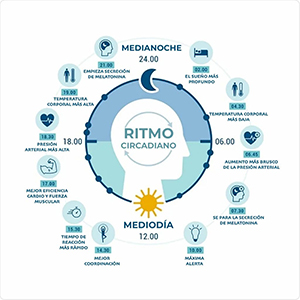
For millions of years, life on Earth has evolved under an unchanging cycle of daylight and nighttime darkness. This cycle regulates what are known as circadian rhythms: the physical, mental, and behavioral changes that organisms experience over a 24-hour period.
The main biological regulator of this clock is the hormone melatonin, responsible for inducing rest and cellular regeneration. Science has shown that melatonin secretion is highly sensitive to short wavelengths of the visible spectrum, specifically blue light (below 440 nm).
Excessive nighttime exposure to standard LED sources (such as the common 4000 K or higher) confuses the body, simulating midday light and blocking melatonin production. This results in sleep disorders, fatigue, and a negative long-term impact on human health.
Assesing the impact: The CFI Index
The Circadian Function Index (CFI) is used in lighting engineering to assess the potential of a light source to suppress melatonin in comparison with a reference source. However, the actual impact on the circadian cycle does not depend solely on the blue component of light, but rather on the combination of several factors, including illumination levels.
In responsible urban lighting projects, the technical objective is to minimize this impact through a comprehensive approach: on the one hand, by selecting luminaires with low blue spectral radiance, and on the other, by optimizing photometric distribution. Thanks to the use of lenses that provide high uniformity, it is possible to reduce illuminance levels (lux) while maintaining visual quality. This reduction, combined with the use of ultra-warm color temperatures, effectively helps to lessen the impact on citizens’ biological clocks.
The silent impact on local biodiversity
Humans are not the only ones affected. Spectral light pollution has devastating consequences for flora and fauna.
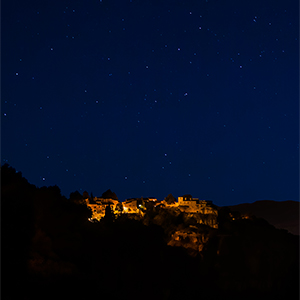
Invasive lighting alters hunting and feeding patterns of nocturnal species, disorients migratory birds (which navigate by the stars), affects the reproductive cycles of amphibians and pollinating insects, and modifies the growth of urban vegetation. Preserving natural darkness is not just a matter of astronomical romanticism, but a necessity for ecological conservation.
ATP Lighting´s technological solution: Ultra-warm spectra and optical control
Addressing this challenge requires a transition toward a responsible lighting model. At ATP Lighting, we have been pioneers in integrating light spectra specifically designed to protect the environment, offering ultra-warm color temperatures (2200 K and 1800 K) and PC Amber LEDs.
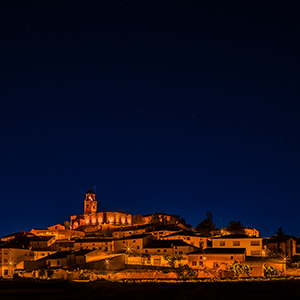
Thanks to this technical rigor, ATP products are the preferred choice for projects located in natural reserves, biological corridors, and destinations with Starlight and Dark Sky certification.
Press contact:
Nicolás Cancio
ATP Lighting
comunicacion@atpiluminacion.com
Copyright © 2016 ATP Lighting Inc. All rights reserved. ATP Lighting, the ATP Lighting logo and all trade names listed on this website with the ® symbol are registered trademarks of ATP Lighting.


![[...]](https://www.atpiluminacion.com/xtra/imgs/loading.gif)