

Why Metals Fail Compared to Engineering Polymers – and How to Achieve Truly Maintenance-Free Installations
ARRE — 12/06/2026 —We continue with the Decision Factors in Public Lighting subseries within ATP Campus. If previous installments covered electrical safety, energy efficiency, and overall durability, today we focus on one of the most silent yet destructive enemies of urban infrastructure: corrosion.
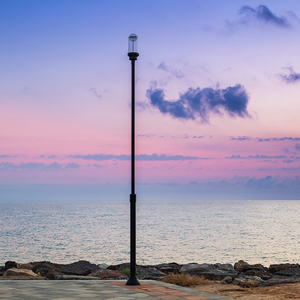
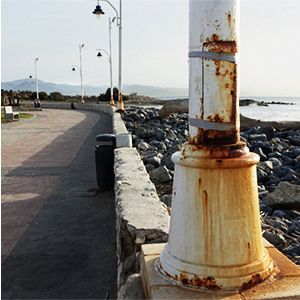
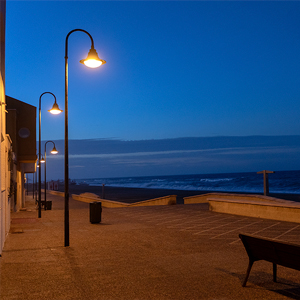
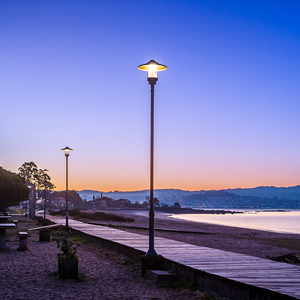
When walking through coastal areas, ports, or seaside promenades, it is common to notice a recurring pattern in public lighting installations: peeling paint, rust spreading along poles, corroded fasteners, and even lighting fixtures that are no longer functioning or have begun to lean. This is no coincidence. The marine environment is one of the most aggressive settings for any outdoor installation.
The vulnerabirity of metals in the urban environment
Traditionally, outdoor lighting has been manufactured using aluminum or steel. Although these materials are widely used, they share a fundamental chemical weakness: they react with their surroundings. In the presence of moisture, sea salt, environmental pollution, or even everyday corrosive agents—such as dog urine around the base of poles—metals undergo oxidation and galvanic corrosion processes.
To mitigate this deterioration, the metalworking industry relies on special coatings and paints that inevitably degrade due to UV radiation and impacts, requiring continuous and costly maintenance work that places a burden on municipal budgets.
The definitive solution: engineering technical polymers
Since its foundation, ATP Lighting’s philosophy has been to identify these systemic industry failures and solve them at their source through materials science. The company’s answer has been to eliminate metals from the enclosure and develop exclusive-formulation Engineering Technical Polymers.
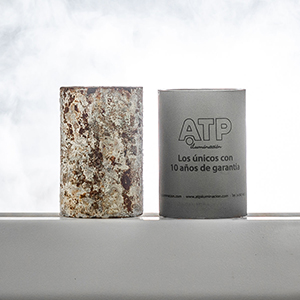
ATP products incorporate two high-performance polymers: S7 for chassis, brackets, and poles, and the T5 thermopolymer for diffusers. Because these materials are polymer-based, they are chemically inert to oxidation. This results in complete immunity to corrosion, regardless of the amount of sea salt, humidity, or toxic gases to which they are exposed.
In addition, ATP polymers are through-colored, meaning that the color is integrated into the molecular structure of the material itself. This completely eliminates the need to paint the luminaire and avoids industrial coating processes that release volatile organic compounds (VOCs) into the environment.
Zero maintenance and genuine warranty
Choosing the right materials is not merely a matter of aesthetics; it is a matter of long-term economic viability. A corrosion-immune installation eliminates the need for reactive maintenance (sanding, repainting, replacing rusted components), drastically reducing the project’s Total Cost of Ownership (TCO).
ATP’s confidence in the durability of its polymers is such that the company offers a comprehensive 10-year warranty—the longest in the industry—applicable even in coastal areas or climates with extreme humidity, with no fine print or environmental exclusions.
In conclusion, when specifying a lighting project, evaluating the chemical resistance of materials is a strategic decision-making factor. At ATP Campus, we will continue exploring the technical principles that help build cities that are safe, cost-effective, and designed to withstand the test of time.
Press contact:
Nicolás Cancio
ATP Lighting
comunicacion@atpiluminacion.com
Copyright © 2016 ATP Lighting Inc. All rights reserved. ATP Lighting, the ATP Lighting logo and all trade names listed on this website with the ® symbol are registered trademarks of ATP Lighting.


![[...]](https://www.atpiluminacion.com/xtra/imgs/loading.gif)